


Your shopping cart is empty!
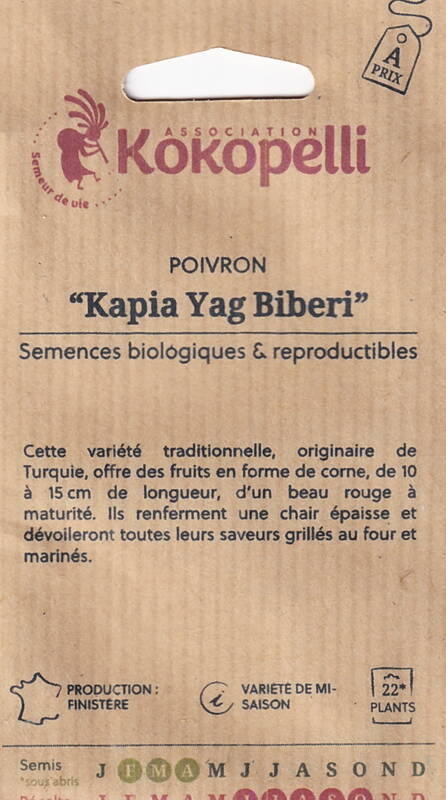
Sweet Pepper "Kapia Yag Biberi"

Eco seeds
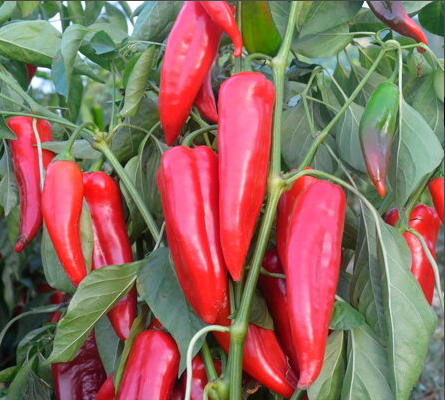
Sweet Pepper "Kapia Yag Biberi" — Capsicum annuum L.
A traditional Turkish variety with spectacular horn-shaped fruits, 10–15 cm long. Upon reaching biological maturity, they acquire a rich dark red color.
This is a mid-season variety. The flesh is very dense, sweet, and aromatic. Created specifically for culinary masterpieces: it reveals its full flavor profile when grilled (roasted) and marinated.
A traditional Turkish variety with spectacular horn-shaped fruits, 10–15 cm long. Upon reaching biological maturity, they acquire a rich dark red color.
This is a mid-season variety. The flesh is very dense, sweet, and aromatic. Created specifically for culinary masterpieces: it reveals its full flavor profile when grilled (roasted) and marinated.
* Secrets of growing pepper seedlings.
If you grow peppers with pricking out (transplanting), water the seedlings abundantly 3–4 hours before the procedure. Transplant them into individual pots (optimal area 8x8 cm or 10x10 cm) filled with a fertile mix.
Soil watering: add 1 cup of diluted mullein or 1 tablespoon of urea to 10 liters of water. Seedlings are buried up to the cotyledon leaves. Shade the pots for 2–3 days for better rooting, then place them on the brightest windowsill.
Water seedlings moderately (peppers do not tolerate swampy soil), once a week, strictly with warm, settled water (+25°C).
Feeding scheme:
1. 10 days after pricking out: per 10 l of water — 10 g urea, 40 g superphosphate, 10 g potassium salt.
2. 1.5 weeks after the first: double the dose of phosphorus. Consumption — 1 liter of solution for 10–12 plants. After feeding, be sure to water with clean water to avoid burning the roots.
Temperature regime: in the first 4 days after pricking out — day +20+22°C, night +18+20°C.
Hardening off: start the procedure a week after pricking out. Seedlings are cooled at +13+15°C for 2–3 hours. A week before planting in the ground, hardening is increased by leaving plants outdoors all day, bringing them into warmth only at night.
6 fatal mistakes when growing peppers:
1. Unnecessary pricking out. Peppers have weak root regeneration. If you skip sowing in boxes and sow directly into peat pots, you can gain 15–20 days that the plant usually spends recovering from transplant shock.
2. Cold soil. For uniform germination, the soil temperature must be strictly +25+30°C. After mass germination, reduce it to +15+18°C for a couple of days (so seedlings don't stretch), then maintain the optimum +22+25°C.
3. Lack of light. Without supplemental lighting (a light day of at least 12 hours is needed), seedlings do not pass the correct development stage, which delays fruiting.
4. Shading. Pepper is a child of the sun. Growing in shade causes stem stretching and will lead to bud drop and loss of early harvest in the future.
5. Seedling starvation. Offended peppers will answer you: "if you can't do it, don't try"! To prevent growth stagnation, feeding with ammonium nitrate is necessary already in the phase of 1–2 true leaves.
Two weeks before planting out, give the plants a complex fertilizer (NPK).
6. Pests. Aphids, spider mites, and cutworms can destroy your work. Inspect leaves regularly! Only absolutely healthy seedlings are planted in the ground.
Seedling standard: at the age of 55–60 days, a quality pepper plant has 12–15 intensely green leaves, a dense stem, and a height of 20–25 cm.